
Table of Contents
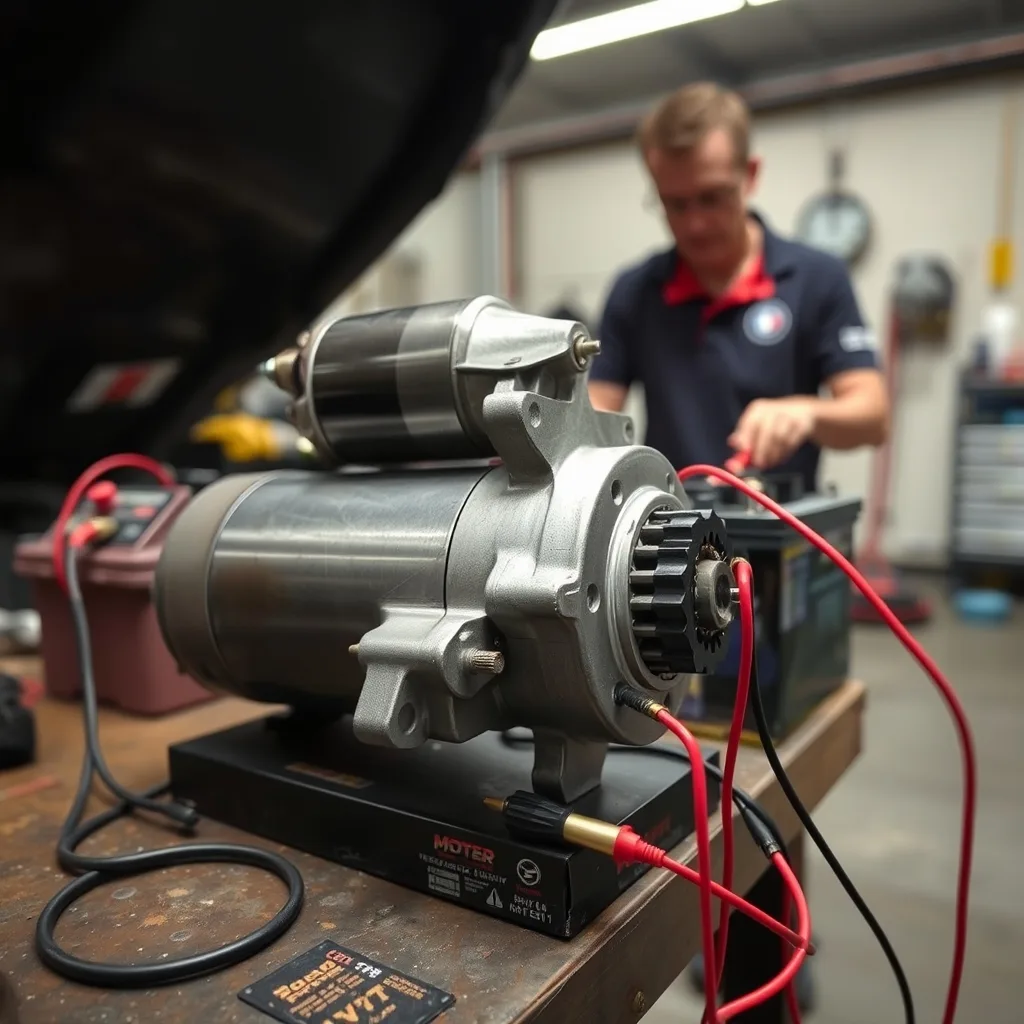
Starter clicks usually mean the starter is not getting enough current or the solenoid cannot engage. The battery, cables, relay, and the starter itself are the main suspects. This guide explains the checks in order so you can find the fault without replacing good parts.
How the Starting System Works
The battery supplies current, the ignition switch or push button sends a signal, and the relay or solenoid connects the starter motor to the battery.
The starter then turns the flywheel. A click without cranking means the circuit is partly working but the motor is not turning.
A push-button start still uses a relay and a starter solenoid. The button only sends the command.
Cause 1: Weak Battery
A battery with low voltage may have enough power for the lights but not for the starter. Cold weather and age reduce capacity.
Charge or jump the battery and retest. A battery that repeatedly goes flat may be old or may have a charging-system fault.
Cold weather reduces battery capacity. A battery that is marginal in summer may fail to crank in winter.
A starter clicks because the solenoid is not getting enough current or because its contacts are worn. A voltage drop test on the control circuit separates the two. If the signal is good and the starter still clicks, the solenoid or the motor is the likely fault. On starter clicks, do not replace the battery without testing it first.
Cause 2: Corroded Terminals and Cables
Corrosion at the battery terminals or a loose ground can cause starter clicks. The connection may look tight but still have high resistance.
Clean the terminals, inspect the cables for swelling, and check the engine ground. A voltage drop test confirms a bad cable.
Check both ends of each cable. A ground that looks tight can be corroded under the insulation.
Cause 3: Relay or Fuse
A failed starter relay or fuse can prevent the solenoid from engaging. Swap the relay with a matching one if possible.
Check for power at the relay and at the starter signal wire. A test light or multimeter makes this quick.
A relay that clicks does not prove it is good. Test for power at the starter signal wire.
Bench testing is the only reliable way to judge a starter. A parts store can test the motor under load and report the current draw. A starter that is weak may crank slowly when hot but pass a no-load test, which is why starter clicks need a load test. On starter clicks, that difference matters.
Cause 4: Solenoid
The solenoid pushes the starter drive into the flywheel and connects the motor. A worn solenoid can click without cranking.
A single loud click may be the solenoid. Multiple rapid clicks often point to low battery voltage or a bad connection.
A solenoid that clicks once may be moving but not making contact. A voltage test confirms the circuit.
Cause 5: Starter Motor
A worn starter motor may draw too much current or fail to turn. Brushes, bearings, and the armature can wear out.
Bench testing or a current draw test can confirm a failing starter. A charging-system guide helps rule out the alternator.
A starter that is slow and hot may be drawing too much current. Have it bench-tested.
A replacement starter should be matched to the engine and the transmission. Some remanufactured units are better than cheap new ones, so ask about the warranty. Clean the mounting surface and the ground before installation. A poor ground can make a new starter click just like the old one.
Cause 6: Engine or Flywheel Problem
A seized engine or a damaged flywheel can stop the starter from turning. This is less common but serious.
If the starter engages but the engine will not rotate, stop cranking and have the engine checked. A broken timing belt can also prevent starting.
A broken engine ground can cause many electrical symptoms. Add a temporary ground to test.
Diagnosis Steps
Start with battery voltage, then check the terminals and grounds. Test the relay and signal wire, then measure voltage at the starter during cranking.
If voltage is low at the starter, the fault is upstream. If voltage is good and the starter does not turn, the starter is suspect.
Do not keep cranking a car that will not start. Fuel or ignition faults can flood the engine or damage the starter.
Cold weather makes a weak battery obvious. A battery that is marginal in summer may fail to crank in winter, and the click you hear is the solenoid trying to move. Test the battery and the charging system before you blame the starter. On starter clicks, a five-minute test can save a parts bill.
Replacement and Prevention
Disconnect the battery before replacing the starter. Label the wires, support the starter, and torque the mounting bolts.
Keep the battery and cables clean, and fix oil leaks that can damage the starter. A good mechanic can diagnose a persistent starter clicks problem. The AAA auto repair guide explains what to ask.
A starter replacement is straightforward on many cars, but access varies. Support the starter and torque the bolts.
If the starter clicks and the lights stay bright, the battery is probably not the problem. Check the signal wire at the solenoid and the ground strap between the engine and the body. A loose ground can cause a no-crank that looks like a failed starter. Fix the connection before you buy a starter; a test light and a helper make this check quick, and a recheck after the repair confirms normal cranking when hot and cold.
Bottom Line on Starter Clicks
Starter clicks are usually a current problem. Check the battery, terminals, cables, relay, and solenoid before replacing the starter.
A voltage drop test is the fastest way to find a bad connection. If the circuit is good and the starter still clicks, replace the starter and keep the battery healthy.
Quick Checklist
- Test battery voltage.
- Clean terminals and grounds.
- Check the relay and signal wire.
- Measure voltage at the starter.
Why does my starter click but not turn the engine?
Common causes are a weak battery, corroded cables, a bad relay or solenoid, or a failed starter motor. Test voltage at the starter during cranking.
Can I jump-start a car with a bad starter?
A jump start may help if the battery is low, but it will not fix a failed starter or solenoid. If the engine still only clicks, stop and diagnose.
How much does a starter replacement cost?
The part often costs $100 to $300, with labor depending on access. Some engines require removing other components to reach the starter.
Punta Dewa is a senior automotive writer at Daily Car Care specializing in OEM repair procedures and cost-transparent maintenance. 6+ years, 150+ guides. Method: OEM manuals, TSB/recall database, and owner data. Author of 1,573 car-care guides since 2022.